A slab of quartzite took millions of years to form. It deserves better than a rushed template and a subcontracted install. This is how we cut, finish and set stone — and why our seams disappear.
Natural stone is unpredictable. Our process isn't.
Every slab has its own grain, fissures, density and movement. Great countertops come from reading the stone before cutting it — and controlling every variable after. We do it all under one roof: selection, templating, layout, cutting, finishing, installation and sealing.
Six materials mastered: quartzite, granite, marble, dolomite, soapstone and engineered quartz
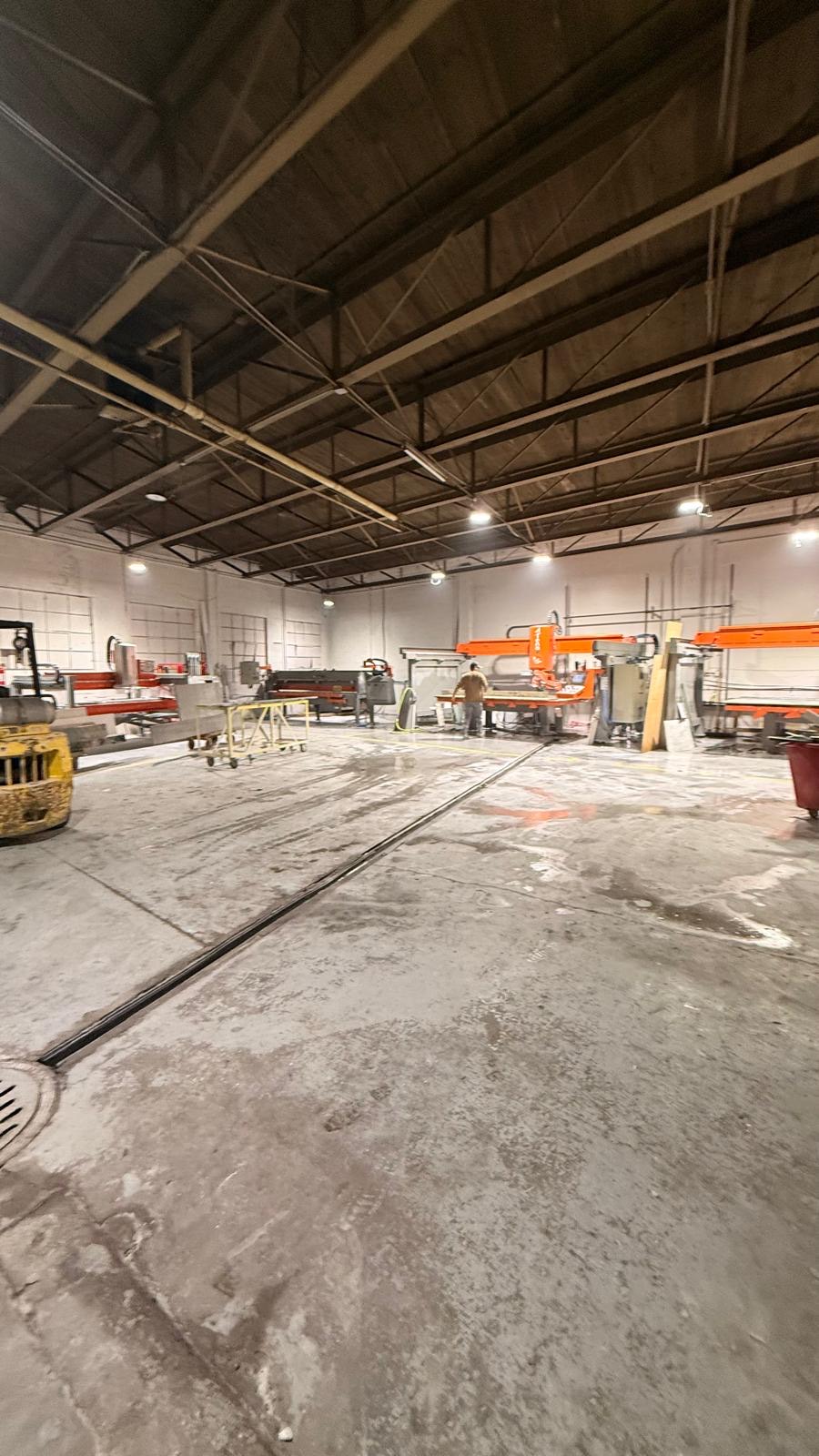
No outsourcing, no mystery fab shop. Your stone is cut on our own bridge saws — water-cooled blades that track a programmed path for clean, straight, chip-free cuts — then profiled, polished and dry-fit by the people who will install it.
Water-cooled bridge saws for precise, dust-controlled cutting
Edge profiling and polishing by hand and machine
Every piece dry-fit and inspected before it leaves the building
Techniques
Nine steps most shops skip or rush.
This is the craft behind the shine — the details you never see on install day, and the reason you'll never think about your countertops again.
Digital laser templating
We map your space with a laser measurement system instead of wood strips and hot glue. Out-of-square walls, wavy plaster and appliance openings are captured precisely, so the stone fits the room you actually have.
Walls scribed, not caulked over
Appliance, sink & faucet specs confirmed on site
Overhangs and seams approved with you
Slab layout & vein mapping
Before a blade touches the stone, every piece is laid out on the actual slab. We decide where the most dramatic figure lands — usually the island face or waterfall — and keep the veining flowing from piece to piece.
Layout reviewed on your slab, not a sample
Defects and fissures cut around
Grain direction kept consistent
CNC-guided cutting
Water-cooled, computer-guided saws cut straight, chip-free lines and repeatable dimensions. Precision cuts mean tighter seams, cleaner cutouts and less stress on hard, brittle stones like quartzite.
Water-cooled to protect the stone
Repeatable across multi-piece kitchens
Clean arrises ready for profiling
Hand-finished miters & waterfalls
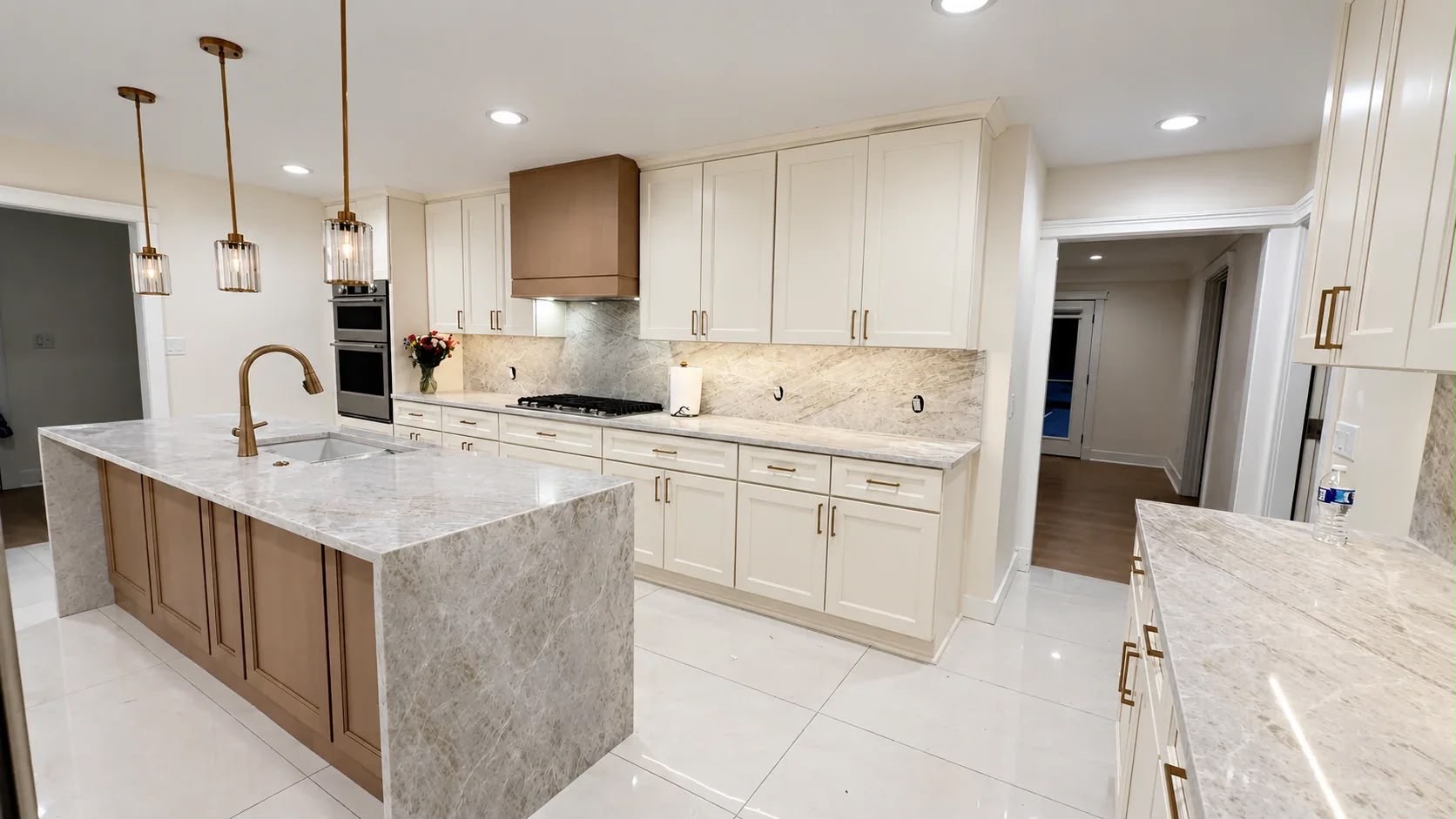
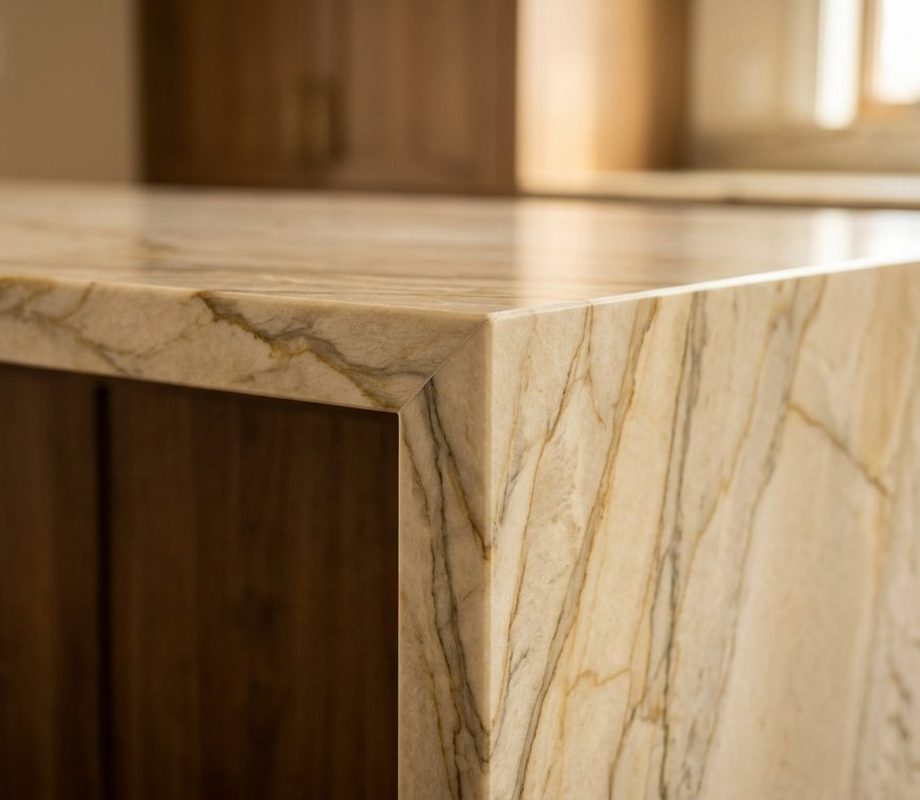
A waterfall is two pieces joined at a 45° miter so the stone appears to fold over the edge. We cut the miter, keep the vein running continuously around the corner and reinforce the joint so it stays invisible for decades.
Continuous vein around the fold
Thick-look aprons from a single slab
Reinforced, color-matched joints
Bookmatching
Consecutive slabs are opened like the pages of a book so the pattern mirrors across the seam. It's the signature move behind statement backsplashes, island faces and shower walls.
Sequential slabs reserved together
Mirror line placed on center
Perfect for full-height backsplashes
Seam engineering
Seams are planned, not discovered. We place them away from sinks and cooktops when possible, match the veining across the joint, tint the epoxy to the stone and draw the pieces flush with vacuum seam setters.
Color-matched epoxy
Flush, level joints
Positioned for strength and looks
Undermount & appliance cutouts
Sink cutouts are radiused and polished to a finished edge — not left raw under the rim. We cut for undermount, farmhouse and integrated drainboards, cooktops and pop-up outlets, and reinforce narrow sections that would otherwise crack.
Polished undermount reveal
Faucet, soap & air-gap holes drilled on site plan
Rodded or reinforced weak points
Edge profiling & polishing
Eased, bevel, half and full bullnose, ogee or mitered — every edge is profiled, then polished through progressive grits until it matches the face. Corners get a radius so they're kind to hips and little foreheads.
Progressive grit polishing
Softened corners
Mitered aprons for a thick look
Finishing & sealing
Polished for depth and shine, honed for a soft matte, or leathered for a tactile texture that hides fingerprints. Natural stones receive a penetrating sealer at install, and you leave with a simple care sheet.
Polished · Honed · Leathered
Penetrating, food-safe sealers
Care & reseal schedule provided
Signature work
Waterfall islands
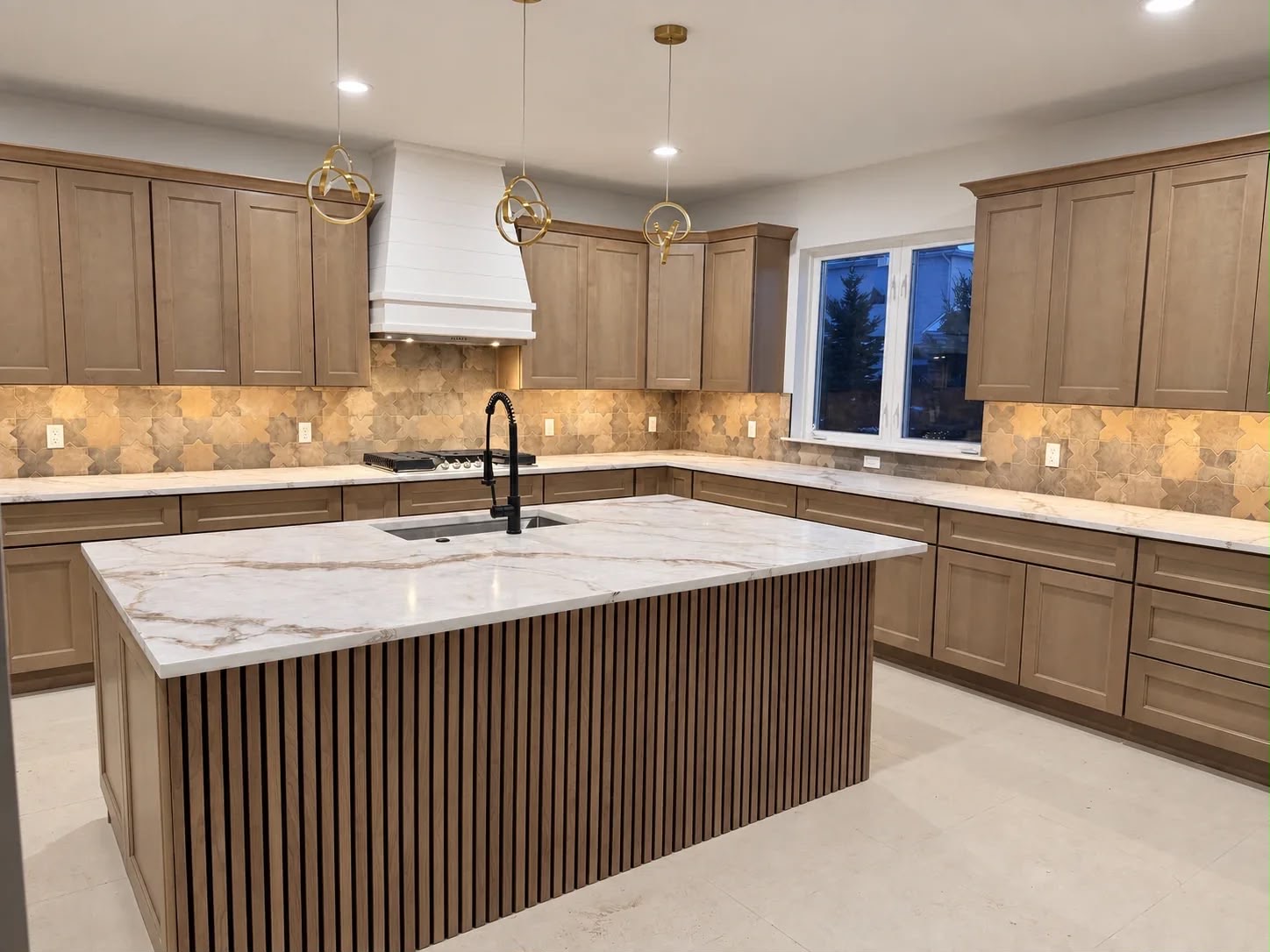
The waterfall is where a fabricator shows their hand. The miter has to be razor-clean, the veining has to continue around the fold and the leg has to land dead level on the floor. We lay the slab out so the most beautiful section wraps the island — then reinforce the joint so it stays invisible.
Single or double waterfall legs
Vein-continuous mitered folds
Integrated seating overhangs with hidden steel support
Statement walls
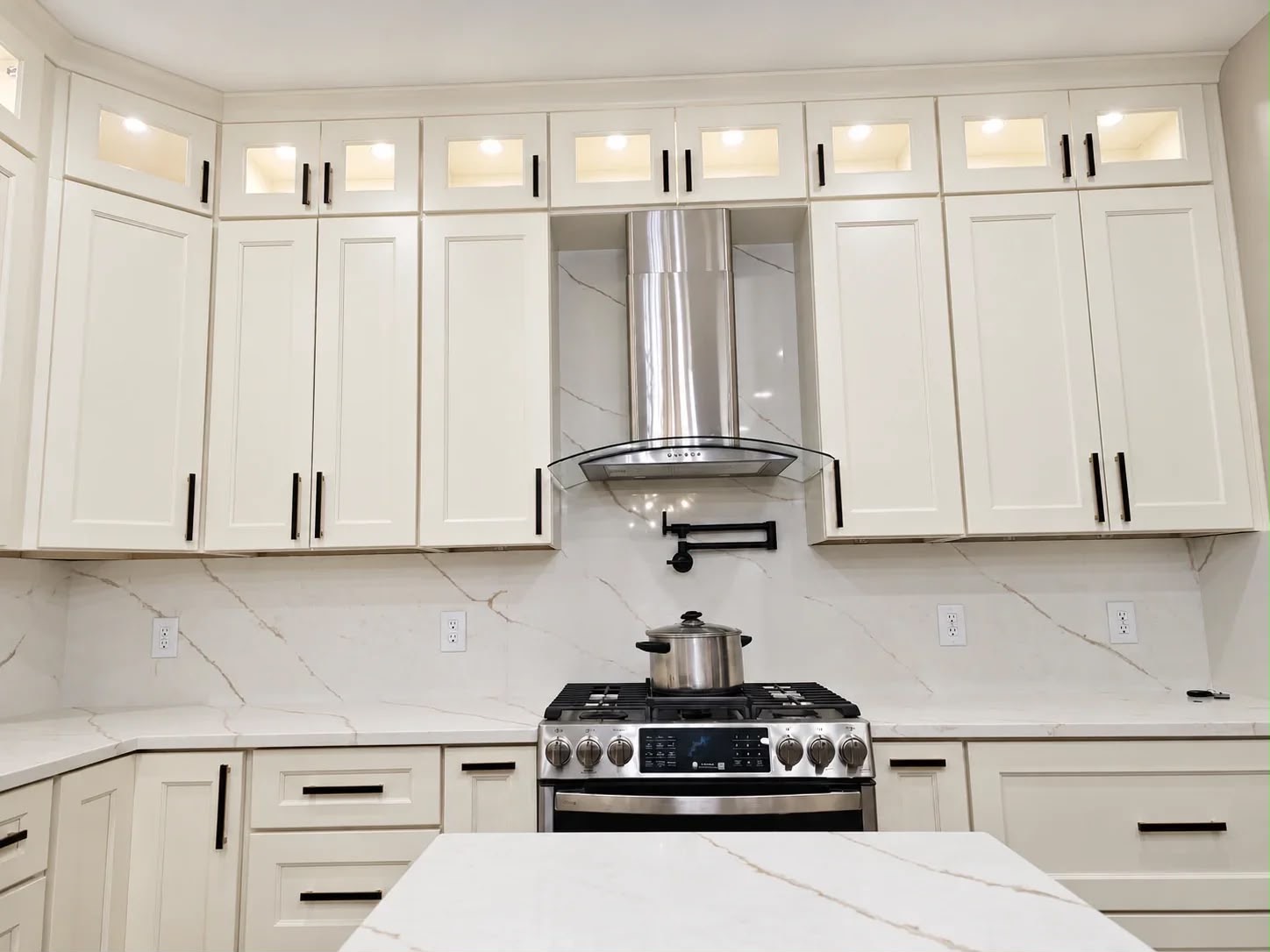
Full-height slab backsplashes
Instead of tile and grout, the stone keeps going — from counter to cabinet, or all the way to the ceiling behind the range. We template around outlets, windows, pot fillers and hood chases, and match the veining to the countertop below so it reads as one continuous piece.
No grout lines to clean
Outlets, pot fillers and shelves precisely cut
Bookmatched behind ranges and hoods
The thick look
Mitered edges
Want a 2½-inch countertop without a 2½-inch slab? We miter a strip of the same slab to the edge so the top looks monolithic — with the veining wrapping the corner like it was carved from a single block.
Any apron height, same slab
Vein-matched corners
Lighter than solid thick stone
Material guide
Which stone fits how you live?
An honest comparison of the six materials we fabricate. We'll steer you to the right one — even when it's the less expensive option.
Material
What it is
Heat
Scratch
Stain
Etch
Care
Quartzite
Natural metamorphic stone, among the hardest countertop materials
Natural talc-rich stone; velvety, darkens with oil
Optional mineral oil
General guidance; performance varies by individual stone and finish. We'll test a sample of your chosen slab on request.
Beyond the kitchen
If it's stone, we cut it.
The same crew, the same tolerances — anywhere in the house.
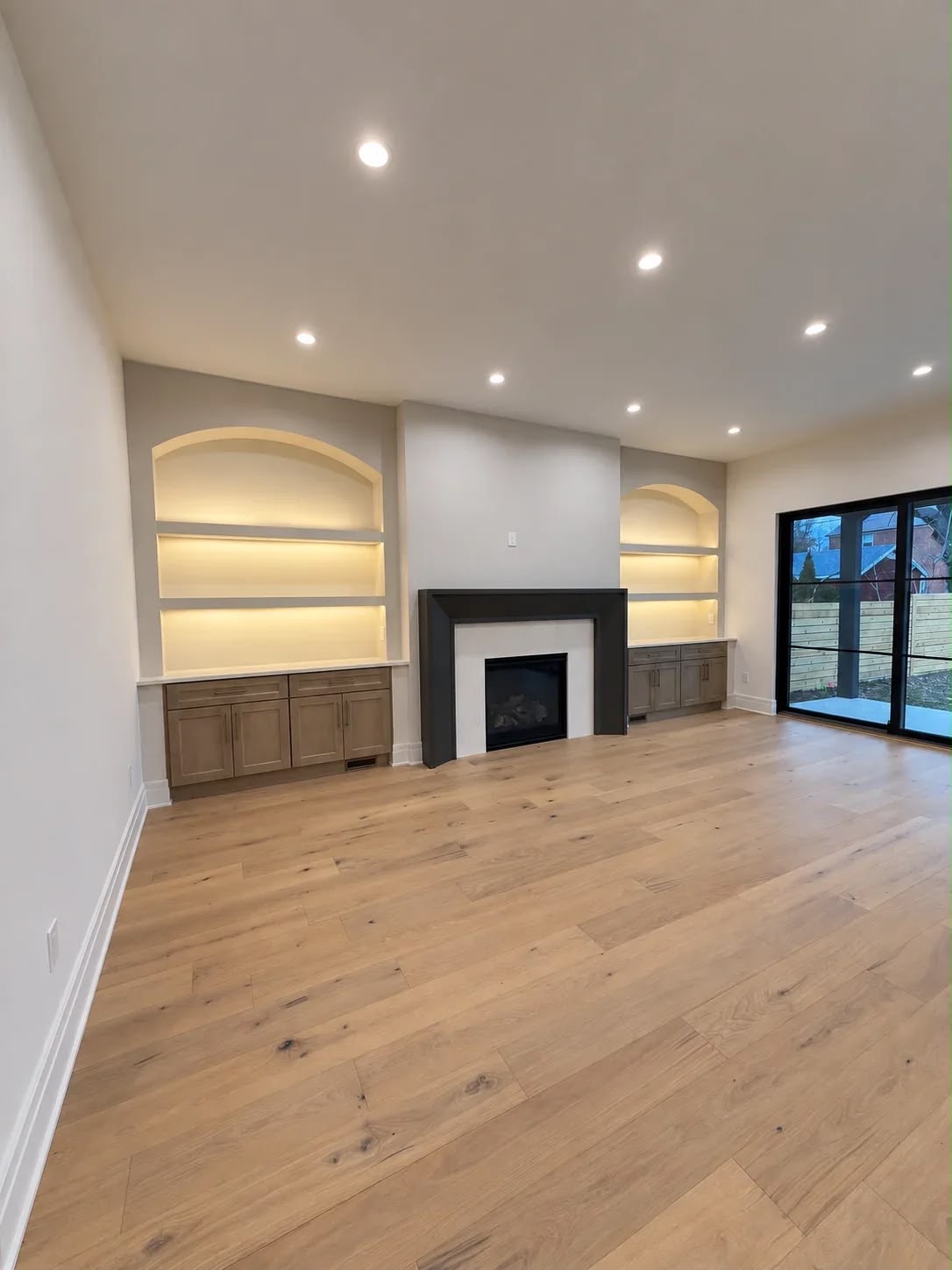
Fireplace surrounds & hearths
Slab surrounds, mitered legs, raised hearths and mantels — heat-tolerant stones selected for the job.
Wet bars & coffee stations
Bar tops, prep sinks and floating shelves in matching stone.
Laundry & mudrooms
Folding counters and utility sinks that shrug off detergent and water.
Outdoor kitchens
Granite and quartzite selected for UV and freeze-thaw cycles — never indoor-only quartz.
Window sills & thresholds
Stone sills, shower curbs and door thresholds cut to match your counters.
Built-in & furniture tops
Dining tables, credenzas, desks and built-in shelving tops.
Install day
Clean install. Hostable that night.
What our crew does in your home — in order — so you know exactly what to expect.
01
Protect
Floors and paths covered, nearby surfaces masked, dust contained.
02
Level & support
Cabinets shimmed dead level; supports added for overhangs and heavy stone.
03
Set & seam
Pieces dry-set, seams epoxied, color-matched and drawn flush.
04
Mount the sink
Undermount sinks clipped and siliconed; faucet holes ready for your plumber — or ours.
05
Seal & clean
Natural stone sealed, everything wiped down, debris hauled away.
06
Walk-through
We inspect every seam and edge with you and leave a care sheet.
Countertop FAQ
Before you choose.
How thick are your countertops?
Most natural stone and quartz is 3 cm (about 1¼"), the standard for kitchens without plywood underlayment. For a thicker look, we miter an apron from the same slab to any height you like.
Can you install on my existing cabinets?
Usually, yes. During templating we check that your cabinets are level, sound and strong enough for stone. If something needs shimming or reinforcing, we'll tell you and include it in the quote.
Do you remove my old countertops?
Yes — we can tear out and haul away laminate, tile, solid surface or old stone. It's listed as a separate line on your quote.
How big can an island be without a seam?
It depends on the slab. Many natural slabs run roughly 120–130" long and about 75" tall; jumbo quartz slabs run larger. We'll measure your chosen slab and tell you before you commit.
Do I need to be home on install day?
For the start and the final walk-through, ideally yes. In between, the crew works independently — most kitchens are set in a single day.